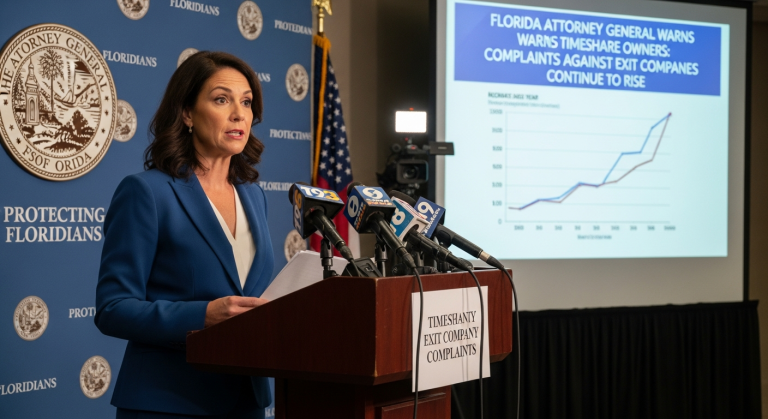
A KELOLAND News video titled “BBB warns of predatory timeshare sales, exits and related scams” highlights a Better Business Bureau report that raises serious concerns about the timeshare, vacation club, resale, and timeshare exit industries. The BBB study, “Unpacking timeshare and vacation club sales,” warns that consumers may face high-pressure sales presentations, deceptive exit promises, hidden costs, and impostor scams that target owners who are trying to get out of unwanted contracts.
For many owners, the problem begins with the original sale. Timeshares and vacation clubs are often marketed as a convenient way to lock in future vacations, but the BBB found that some consumers later discover booking restrictions, undisclosed fees, and long-term financial obligations that were not clearly explained before they signed
Timeshares Can Cost Tens of Thousands of Dollars
According to the BBB report, the average timeshare purchase price in 2021 was $24,140, and annual maintenance fees averaged $1,120 that same year. The BBB also cautions that timeshare purchase prices should not be treated like traditional real estate value, because many owners later face steep losses when trying to resell.
That is why one major red flag is any salesperson describing a timeshare or vacation club as an “investment.” The FTC similarly warns that the value of a timeshare is primarily in its use as a vacation destination, not as a financial asset, and that owners must account for recurring fees, taxes, and maintenance charges even if they do not use the property.
BBB Complaints Show a Pattern of Pressure and Hidden Fees
Between 2020 and 2022, BBB data shows more than 20,000 timeshare-related complaints, based on annual complaint totals of 6,602 in 2020, 7,622 in 2021, and 5,894 in 2022. The BBB report also documented thousands of negative reviews during the same period, with consumers describing misleading promises, difficulty booking vacations, and unexpected costs.
A common complaint involves high-pressure sales presentations. The BBB found that a short presentation can turn into an hours-long sales meeting, with consumers reporting “today only” offers, aggressive closing tactics, and claims that cancellation will be easy when that may not be true for most contracts.
Maintenance fees are another major issue. The BBB notes that these fees can total thousands of dollars per year and often rise over time, while some buyers say they were not clearly told about the fees or how frequently they would increase.
Vacation Clubs Can Carry Similar Risks
Vacation clubs may sound different from traditional timeshares, but the BBB says many operate in a similar way. Buyers may pay upfront fees and ongoing maintenance costs in exchange for access to destinations, but they often do not own property; they are typically purchasing a right to use vacation inventory.
Because vacation club memberships can also be hard to sell or cancel, consumers should review every contract carefully before signing. The BBB recommends researching companies in advance, reading all terms, and understanding booking rules, fees, cancellation rights, and long-term obligations.
Timeshare Exit Scams Can Be Just as Predatory
The BBB report also warns that some timeshare exit companies use the same kind of pressure and misleading language that consumers complained about during the original sale. Owners who are desperate to escape rising maintenance fees may be promised quick sales, guaranteed cancellations, or major savings, only to be charged large upfront fees with no successful exit.
The FTC has issued similar warnings. It says signs of a timeshare exit scam include unsolicited calls or messages, promises to cancel a contract, demands for large upfront fees, and instructions to stop paying a mortgage or maintenance fees.
In one FTC consumer alert, the agency warned that some exit companies “guarantee” they can get owners out of contracts but may simply be scams. In that case, the FTC said a company targeted older adults through mailers and presentations, charged fees ranging from $5,000 to $80,000, and rarely delivered.
Consumers Have Lost Millions to Vacation and Timeshare-Related Scams
The financial harm can be significant. BBB Scam Tracker data in the report shows vacation-related scam losses of about $3.58 million from 2020 through 2022, including losses tied to timeshare and vacation-related schemes.
The FTC also warns that timeshare owners may be targeted even when they are not actively trying to sell. Scammers may call claiming to be real estate agents with interested buyers, ask for upfront payments, and then demand more money before disappearing. The FTC says timeshares are difficult to sell, and only a scammer will claim they already have a buyer or can quickly find one.
How Timeshare Owners Can Protect Themselves
Consumers should be cautious of any unsolicited call, letter, email, or online ad offering to sell, rent, transfer, or cancel a timeshare. A legitimate solution should not depend on pressure, secrecy, or an immediate payment.
Before signing with any timeshare resale or exit company, owners should:
- Contact the resort or developer first. The FTC recommends starting with the timeshare company directly to ask about surrender, deed-back, or official exit options.
- Avoid large upfront fees. The FTC warns that upfront fees are a major danger sign in resale and exit scams, especially when paired with promises of fast sales or guaranteed results.
- Do not trust “guaranteed buyer” claims. A company claiming it already has a buyer, can sell quickly, or can recover most of the original purchase price should be treated with extreme caution.
- Get every promise in writing. Verbal promises made during a presentation or sales call are difficult to enforce if they do not appear in the contract.
- Research the company thoroughly. Search the company name with words like “complaint,” “scam,” “lawsuit,” and “BBB.” Check state licensing, attorney general records, and consumer protection agencies.
- Do not stop paying fees without professional advice. Some exit companies may tell owners to stop paying maintenance fees or loans. That can create credit, collection, or legal consequences.
- Be wary of “investment” language. Timeshares should be evaluated as vacation-use products, not as reliable financial investments.